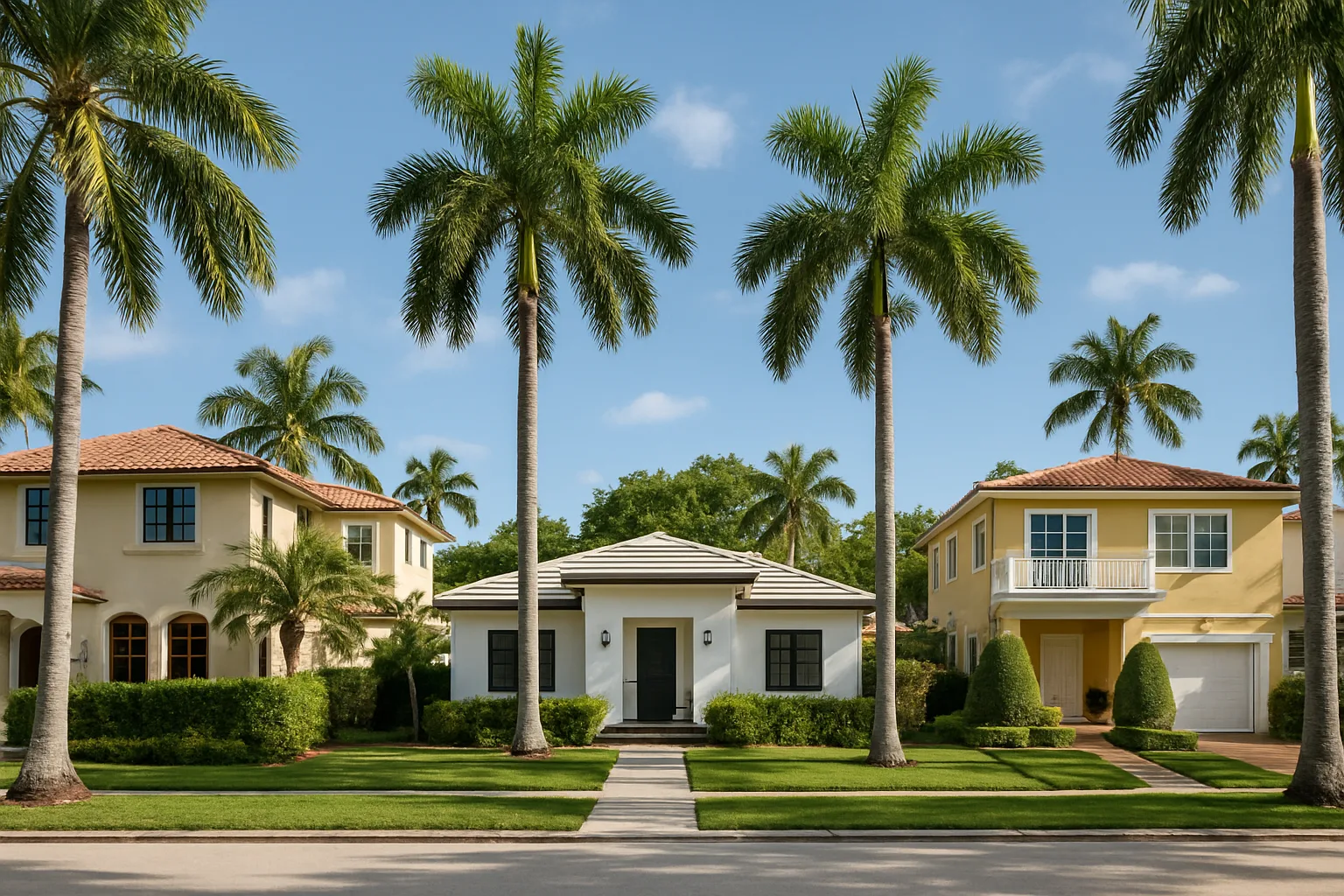
The estimated current median home value in Miami is $687,000, based on U.S. Census Bureau ACS 2020–2024 owner-occupied values updated with the FHFA House Price Index through 2026 Q2. Miami’s estimate comes from ACS medians adjusted by the FHFA index using this method.
For context, the estimated medians are $610,000 in Miami-Dade County and $405,000 in Florida (same method and period).
| Geography | Estimated median home value (2026 Q2) | ACS median (2020–2024) | Median gross rent (USD) | Median rooms | Median year built |
|---|---|---|---|---|---|
| Miami | $687,000 | $518,100 | $1,760 | 3.8 | 1979 |
| Miami-Dade County | $610,000 | ||||
| Florida | $405,000 |
Miami’s current median home value
Using the method described below, the estimated current median value of owner-occupied homes in Miami is $687,000 as of 2026 Q2. This estimate is derived from the U.S. Census Bureau American Community Survey (ACS) 2020–2024 median value and updated to the present using the FHFA House Price Index (HPI).
Because the figure reflects the citywide median, it blends many property types and neighborhoods. Specific homes can be above or below this benchmark depending on location, condition, size, and building type.
How Miami compares with the county and the state
Miami’s estimated median value of $687,000 sits above both the broader county and the state using the same approach and period. Miami-Dade County’s estimated median is $610,000, while Florida’s is $405,000 (all updated through 2026 Q2 using the FHFA HPI).
Comparisons like these give a quick sense of relative pricing levels: Miami is higher than the county overall, and substantially higher than the statewide figure. For buyers evaluating neighborhoods and broker support across the city, see Real estate brokerages in Miami.
Rents, typical home size, and age in Miami
The median gross rent in Miami is $1,760. Median rent provides a complementary view of housing costs and may inform buy-versus-rent considerations, though rent and price dynamics do not always move in tandem.
For physical characteristics, Miami’s median rooms count is 3.8. Rooms are defined by the ACS and can include bedrooms, living rooms, dining rooms, etc.; they do not directly convert to square footage, but they help compare typical home size within and across markets.
The median year built for homes in Miami is 1979, indicating much of the city’s housing stock dates to late-20th-century construction. Age interacts with renovation history and building type—two properties from the same year can have very different effective ages depending on updates and maintenance.
What the post-2022 price trend implies
The data include a house price index factor since 2022 of 1.326. Interpreted simply, this means the index used to update values has increased by about 32.6% from 2022 to 2026 Q2 for this market segment and method. Applied to ACS medians, this factor helps translate past medians to a current-period estimate.
Index-based updates are useful for tracking broad market movement. However, they cannot capture individual home changes such as renovations, specific building assessments, or micro-neighborhood shifts—factors that can move a home’s market value away from the citywide median.
How these estimates are produced
Method summary: U.S. Census Bureau ACS 2020–2024 median value of owner-occupied homes, updated with the FHFA House Price Index to 2026 Q2. The ACS provides baseline medians by place; the FHFA HPI is then used to bring those medians forward to the latest quarter shown here.
This approach provides a consistent, comparable snapshot across geographies and time. It is not an appraisal and should not be used as the sole basis for pricing any specific property.
Getting an accurate valuation for a specific home
To estimate a particular home’s value, combine recent comparable sales, listing activity, and property-specific details such as condition, upgrades, exact location, and building amenities. A practical first step is consulting local professionals who regularly work your neighborhood and property type. You can start with Real estate brokerages in Miami to identify local expertise.
For Spanish-speaking support, consider working with an agent who can assist in your preferred language; see Spanish Speaking Real Estate Agent: How to Find One (2026). If you plan to sell or buy, it’s also helpful to understand fee structures; see Real Estate Commission in Florida: Who Pays After 2024 for a plain-language overview.
Property taxes and budgeting considerations
When evaluating affordability, include property taxes alongside mortgage payments, insurance, and upkeep. Local tax practices can change overall carrying costs for both long-time owners and new buyers.
For an overview of local tax context, see Miami-Dade County Property Tax: Medians, Rate and What Buyers Should Know. Keep in mind that tax liabilities and exemptions can vary by property, use, and timing; confirm details for your specific home with the responsible office or a qualified advisor.
Frequently asked questions
Are Miami’s home value estimates based on recent sales or surveys?
The baseline comes from the U.S. Census Bureau’s ACS 2020–2024 median value of owner-occupied homes, which is a survey-based measure. That median is then updated to 2026 Q2 using the FHFA House Price Index, which reflects market price changes over time.
Does the Miami median include condos and single-family homes together?
Yes. The ACS median value reflects owner-occupied homes across property types within the city. As a result, the estimate blends condos, single-family homes, and other owner-occupied units.
How often are these Miami estimates updated?
The ACS provides multi-year medians, and the FHFA House Price Index is then applied to bring values forward. The period referenced here is updated through 2026 Q2 using that index.
What’s the typical size of a Miami home in square feet?
Square footage is not provided here. The ACS reports a median of 3.8 rooms for Miami, which offers a general sense of size but does not translate directly into square footage.
How can I get a precise valuation for my Miami home?
Use recent comparable sales, condition and upgrade details, and a location-specific analysis. Working with a local professional can help—see Real estate brokerages in Miami—and review fee norms at Real Estate Commission in Florida: Who Pays After 2024.
This article is for general information only and is not legal, tax or financial advice. Amounts and rules change: confirm them with the official sources linked above or with a licensed professional before making decisions.